

Accessibility

The following initiatives are in place so everyone can enjoy the Museum safely and comfortably. Museum staff are all ready to help, so do not hesitate to approach them with any concerns.

Equipment and Facilities

View a map of the Museum layout here. The building consists of one basement floor and four floors above ground.

Museum Map (PDF)
Illustration : Wheelchair mark

Parking

Exclusively for visitors with reduced mobility

Handicapped visitors are permitted to park at the front entrance of the museum. The parking spaces at the museum are for the exclusive use of visitors with reduced mobility. If you would like to use the parking, please ask one of the security guards in the museum forecourt.

Illustration: A person in a wheelchair going up the slope

Ramp

There is an incline at the museum entrance. The entrance doors are automatic.

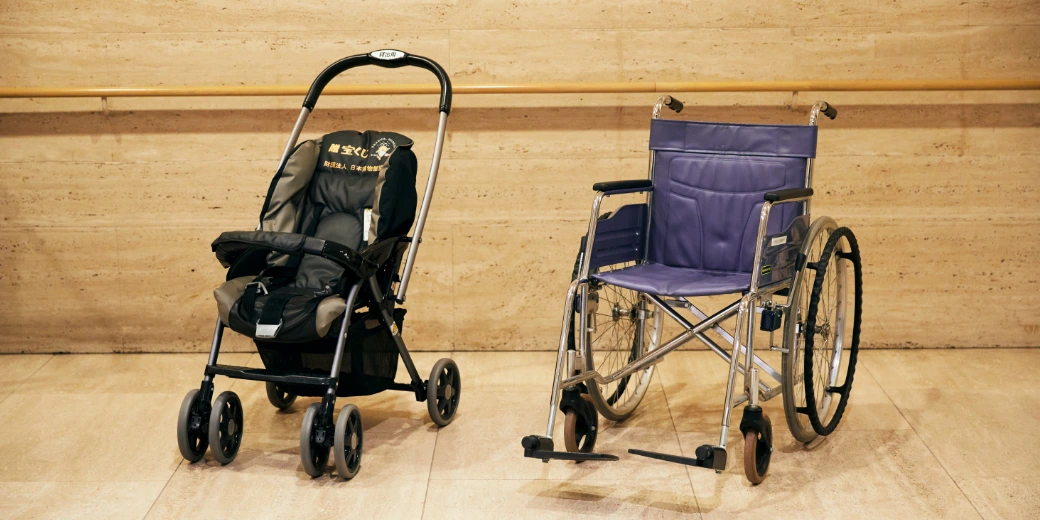
Photo : A simple black stroller and a wheelchair with a purple seat lined up

Loan wheelchairs and baby carriages

There are about ten wheelchairs and three baby carriages available for loan. Please inquire at the information desk on the first floor.

Illustration : A person in a wheelchair going up the slope

Coin lockers

Coin lockers are situated on several floors of the Museum. The information desk can take any large bags that don’t fit in the lockers. Feel free to ask about this service.

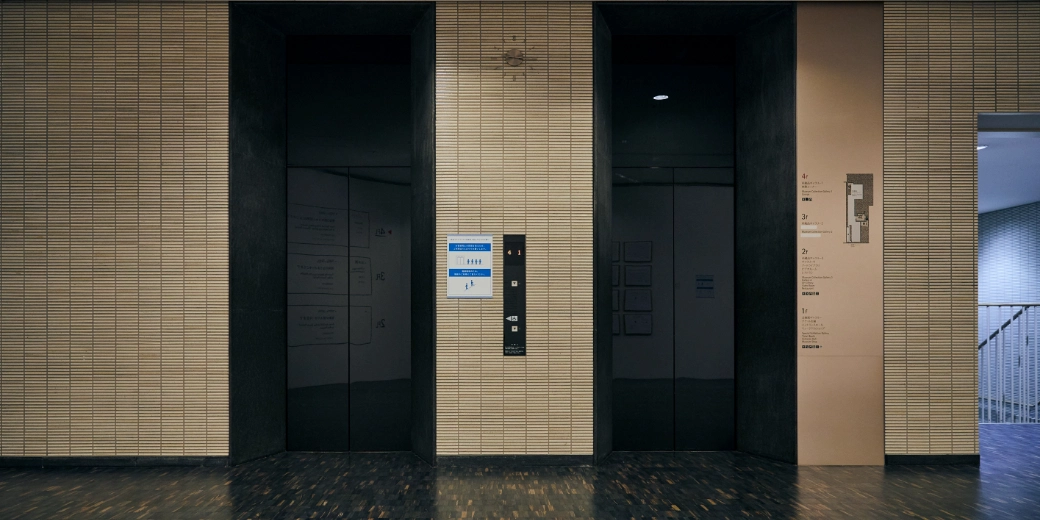
Photo : Elevator with two black doors side by side. There is an operation button in the middle.

Elevators

The Museum has three elevators, all equipped to transport wheelchairs.

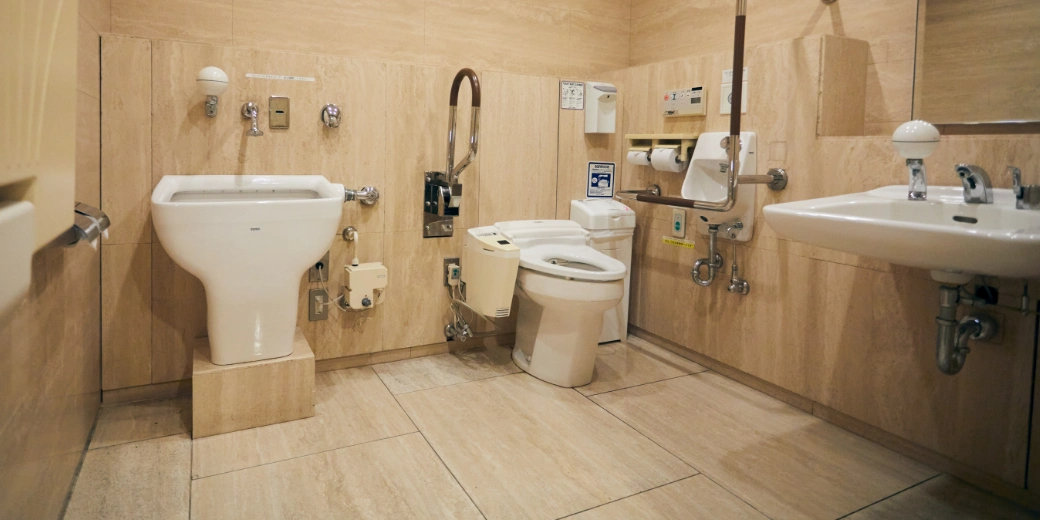
Photo : Equipment for ostomates (artificial anus and artificial bladder) and toilets with handrails are lined up, and there is a facility for folding diaper changing sheets in front.

Multi-purpose toilet

There are three multi-purpose toilets in the building (basement auditorium, 1F, 2F). There are facilities for ostomates (people who use an ostomy pouch) in the multi-purpose toilet on the first floor. Disposable diaper changing sheets are available.

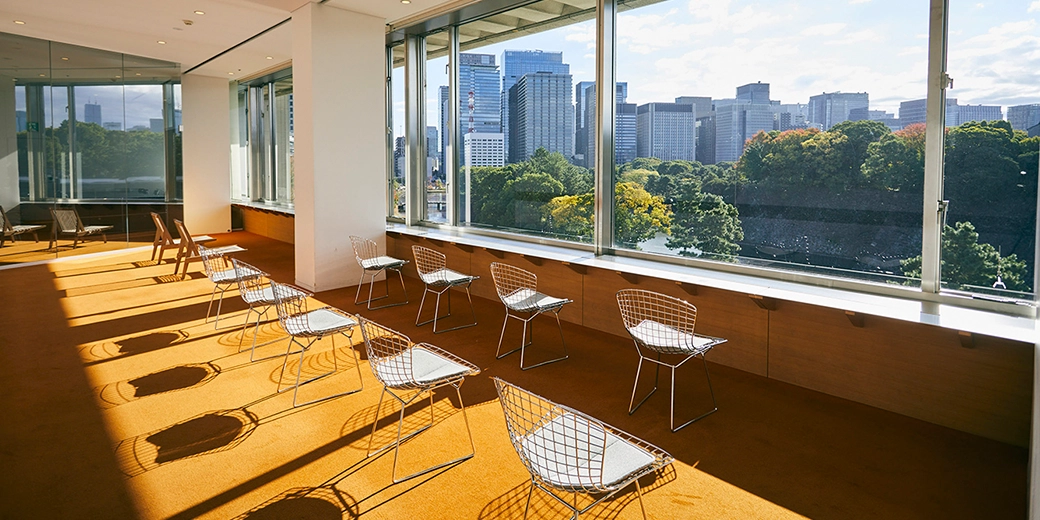
Photo : Eleven chairs are lined up on an orange carpet. The Imperial Palace and the buildings of Otemachi can be seen outside the large windows.

Seating

There is seating available on the terrace on the second floor, the Room with a View on the fourth floor, and outside the Museum on the first floor (by the entrance), and throughout the exhibition rooms.

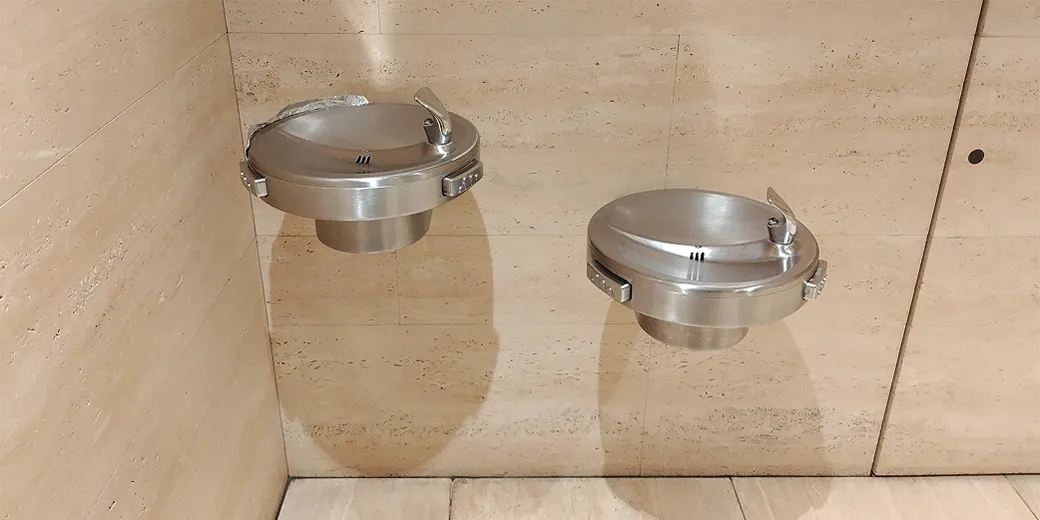
Photo : In the back, there is a window with curtains and four chairs for children, a simple sink in front of it, a white adult chair next to it, and a folding diaper-changing seat in front.

Drinking Fountains and Vending Machines

In order to protect the artworks, eating and drinking inside the Museum is not permitted. We ask visitors to hydrate in the shaded rest areas outside the Museum where a vending machine is installed.

Photo : A simple black stroller and a wheelchair with a purple seat lined up

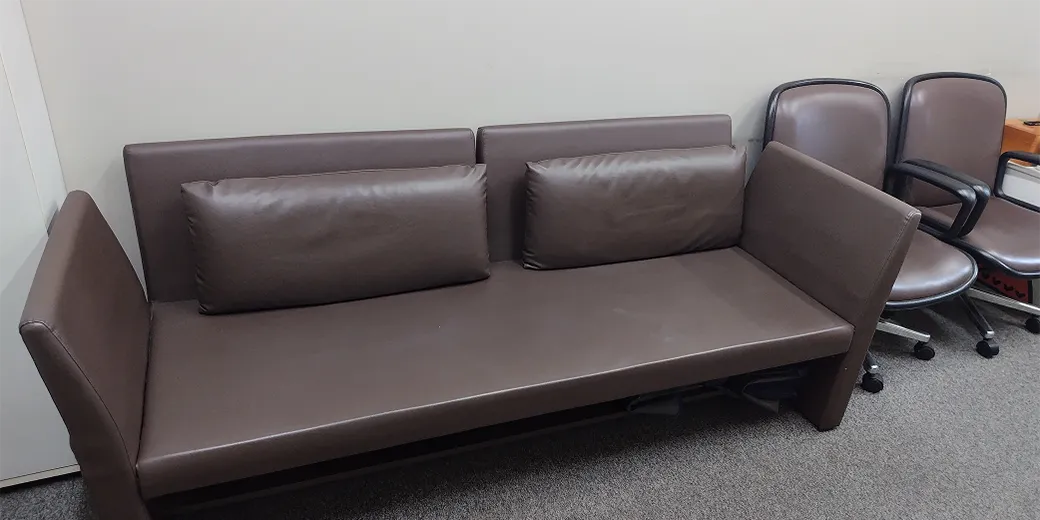
Rest area

Visitors who feel ill are encouraged to approach nearby staff, who will guide them to the first aid room. Although the first aid room is available as a private room, the Museum cannot provide emergency medical treatment.

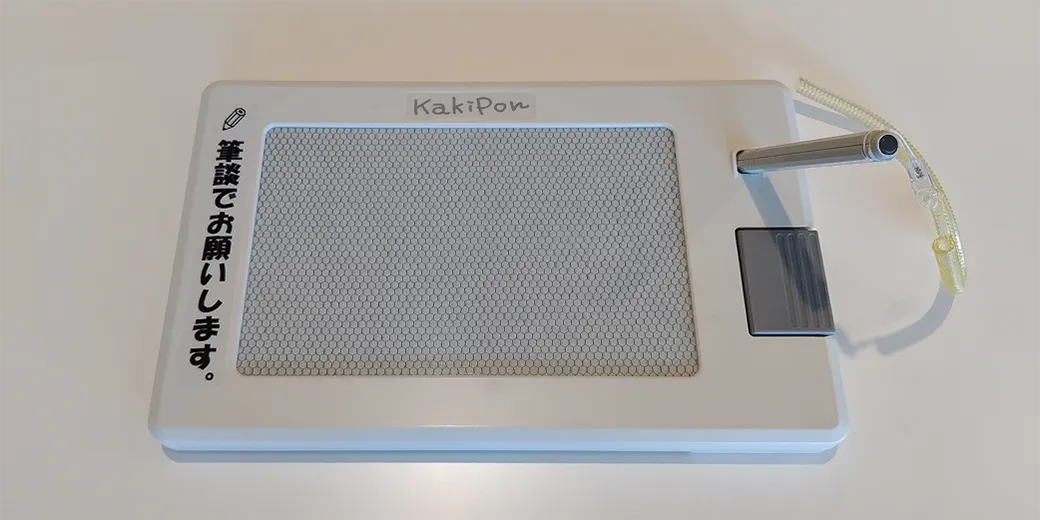
Photo : White tablet-sized communication board

Writing tablets

Writing tablets are available for written communication. To use one, ask at the information desk.

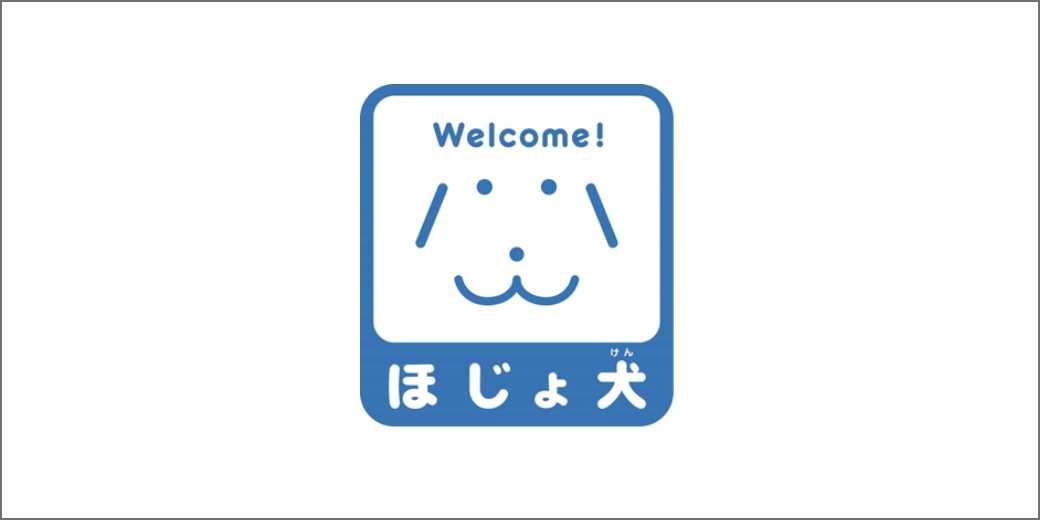
Illustration : Hojo dog (Assistance Dog) mark

Hojo dog (Assistance Dog) mark

Service dogs, including guide dogs, assistance dogs, and hearing dogs are allowed in the museum.

For Visitors with Small Children

For Visitors with Small Children

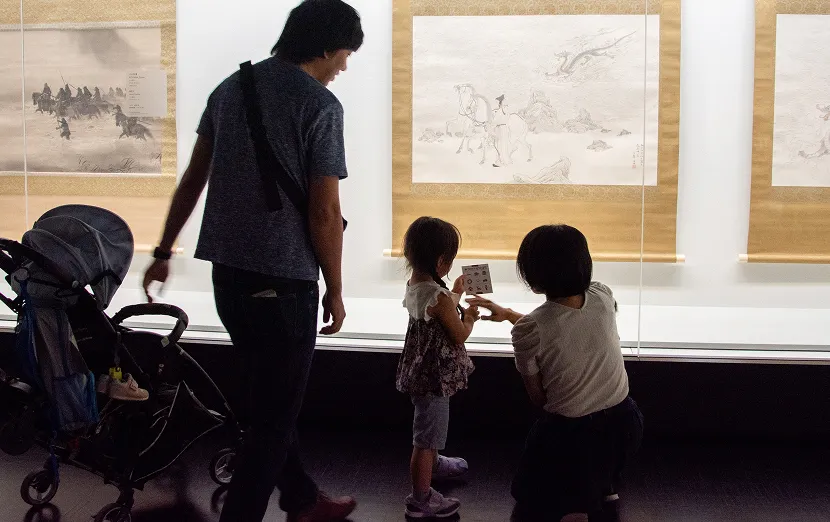
  • Strollers/prams are welcome in the exhibition rooms.
  • There are diaper changing facilities in the first and second floor toilets.
  • There is a baby nursing room in front of the first floor lockers.
  • Takebashi Station has an elevator at Exit 2.

Services

Visitors who need assistance buying a ticket at the ticket counter can ask any nearby staff member for help.

Information desk services

Items listed above are available from the Information Desk. Visitors are also invited to consult with Information Desk staff about any concerns relating to using Museum facilities.

Discounts

The following people can show ID to enter the Collection exhibitions for free.

  • Under age 18 or age 65 and over.
  • Holders of a shogaisha techo (disability certificate, or similar ID for people not residing in Japan) and one companion

Recommended Apps

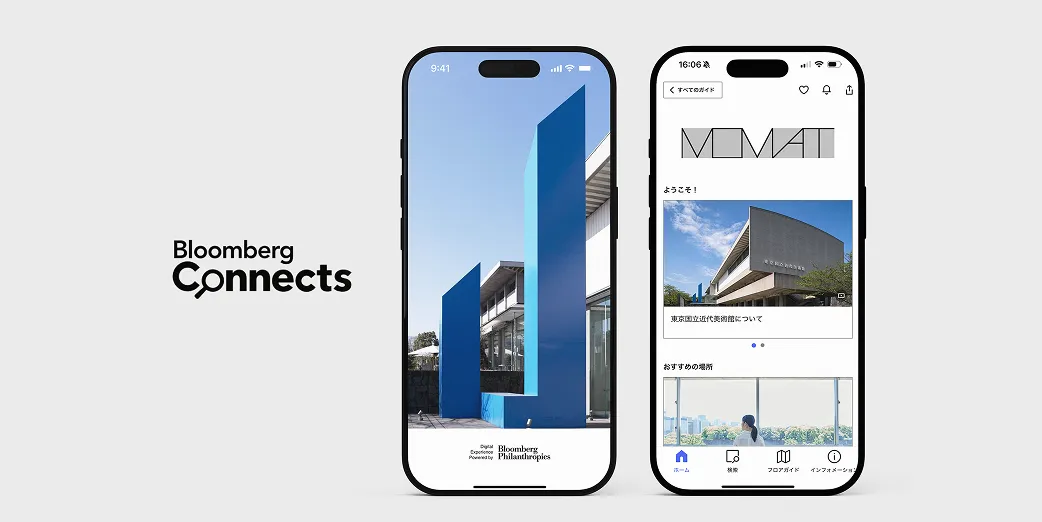
MOMAT offers a free app with a digital guide to the Museum that can be used both at the Museum and at home.

Free Digital Guide Bloomberg Connects

Free Digital Guide Bloomberg Connects

View information about current exhibitions, recommended places, explanations about works in the collection, video recordings of talks given by curators, and more. Automatically translated into over forty languages.

Bloomberg Connects
MOMAT Collection Free Guide App Catalogue Pocket

MOMAT Collection Free Guide App Catalogue Pocket

Read about the MOMAT Collection works on display in Japanese, English, Korean, and both Simplified and Traditional Chinese.

Catalogue Pocket

Barrier-free Access

Access to the Art Library

Go to the 2nd floor Art Library using a barrier-free route.

Access to the Art Library

Access to MOMAT

Arriving by Subway

Information for visitors with reduced mobility or visitors using wheelchairs:

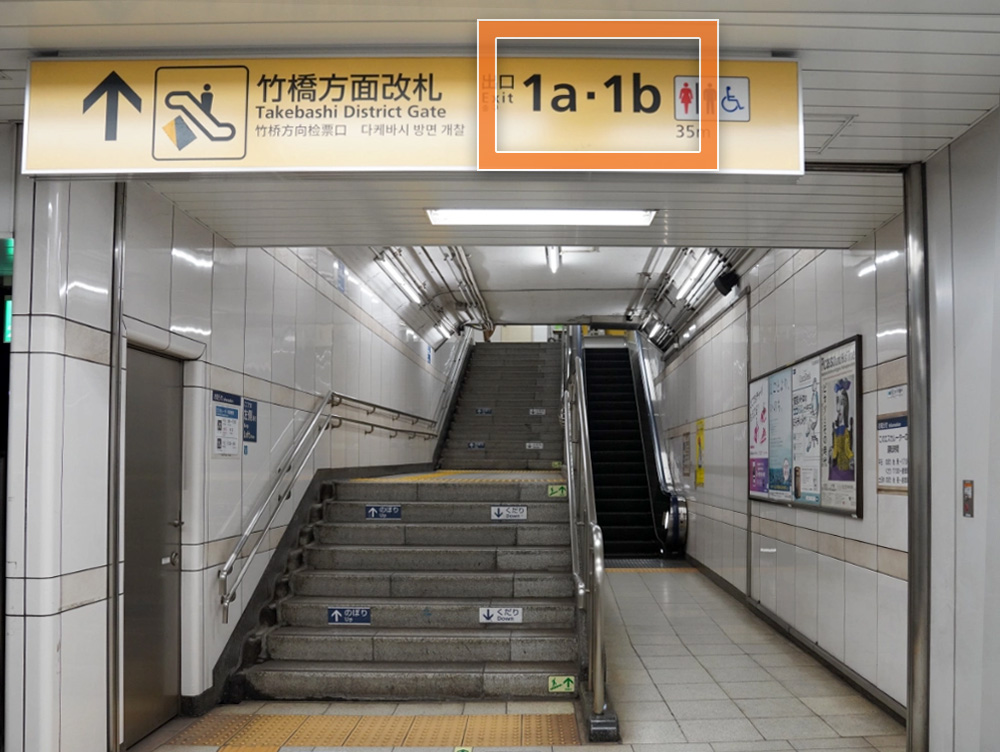
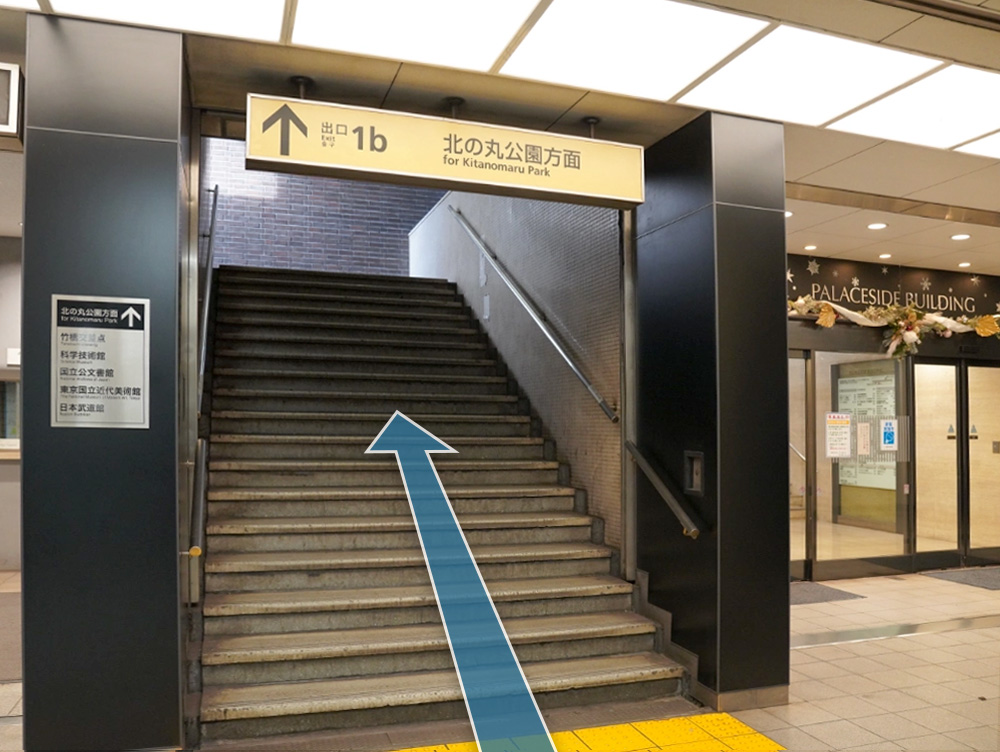
If you arrive at Takebashi station, please note that Exit 1b, the closest exit to the museum, does not have an ordinary elevator or a wheelchair elevator.
Please use Exit 2 (approximately 150m to the museum) or arrive at Kudanshita station (approximately 900m from the Exit 6) or Jinbocho station (approximately 700m from Exit A2) where there are elevators.

Going to the Museum from Takebashi Station

Travel from the nearest subway station to the Museum using a route without stairs.

Obstruction-free Route to MOMAT

Obstruction-free Route to MOMAT from Exit 2 at Takebashi Station (T08) on the Tozai Line.

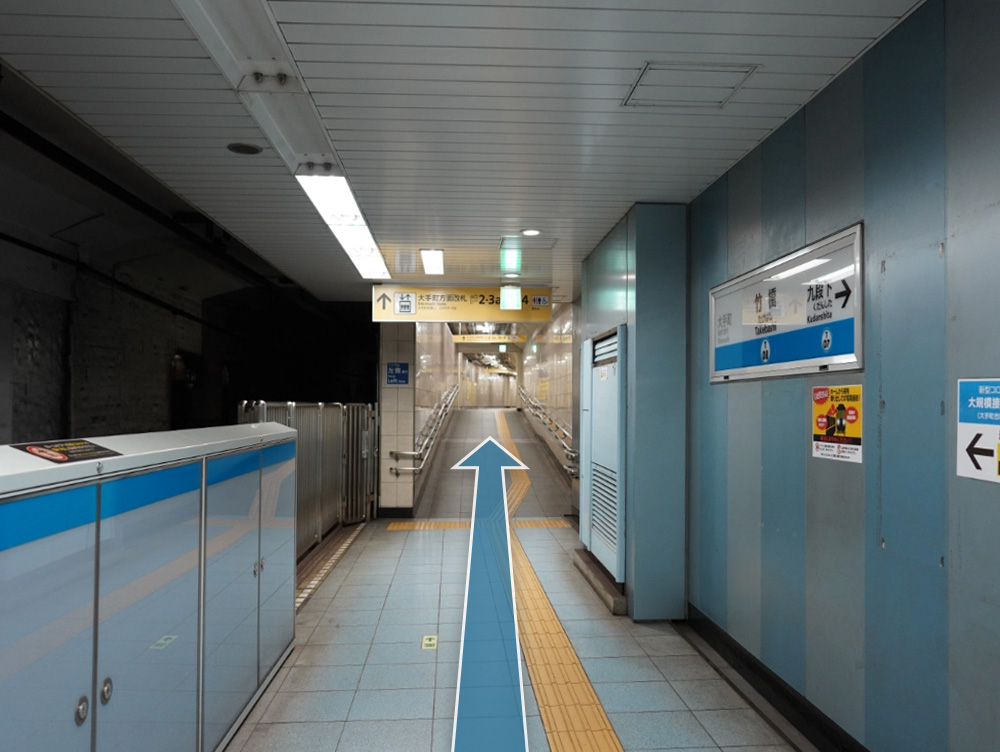
Photo: Tokyo Metro Tozai Line/Takebashi Station Platform (Information signs for Otemachi ticket gates, exits 2, 3a, 3b, and 4, restrooms (men, women, universal)
1 Get off the Tozai Line at Takebashi Station and head toward the exits for Otemachi (2, 3a, 3b, 4). There is a gentle ramp on the way to the elevator. There are no ramps or elevators at Exits 1a and 1b.
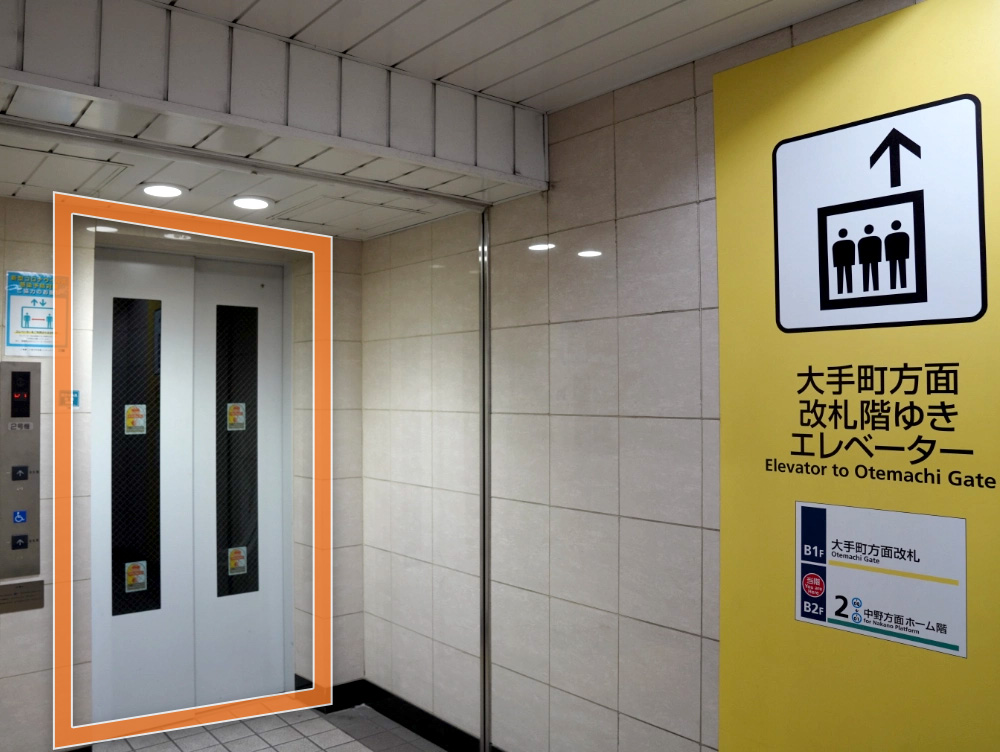
Photo: Elevator to ticket gate floor for Otemachi. There is a signboard ahead indicating the elevator.
2 Take elevator No. 1 to the Otemachi ticket gate.
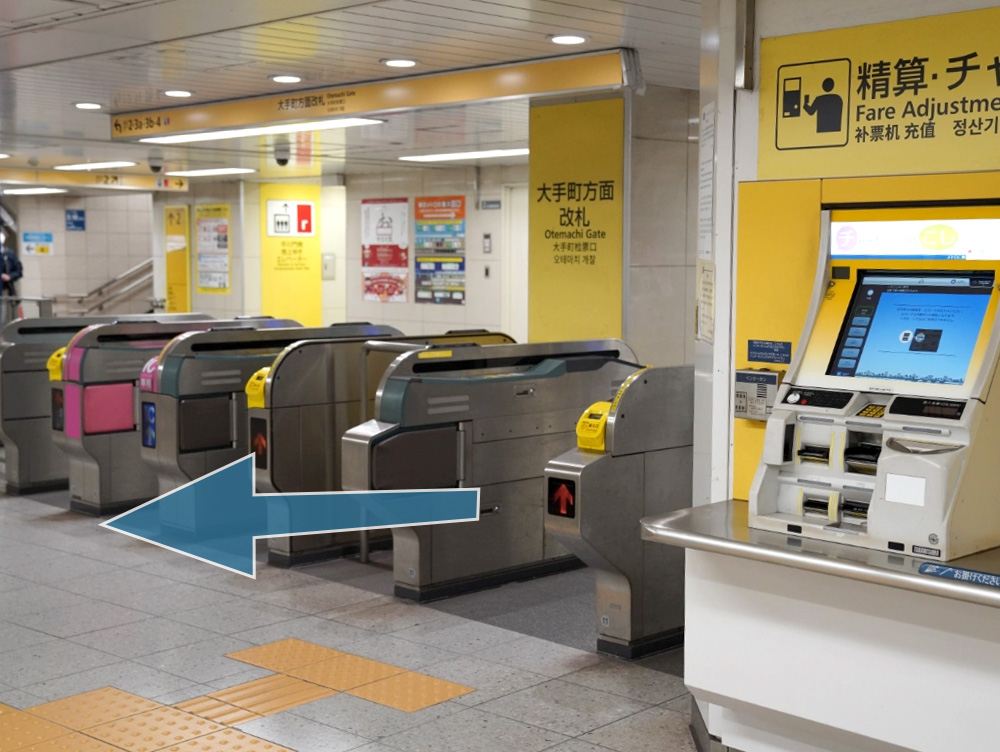
Photo: A ticket machine in front of the Otemachi ticket gate.
3 Pass through the ticket gate.
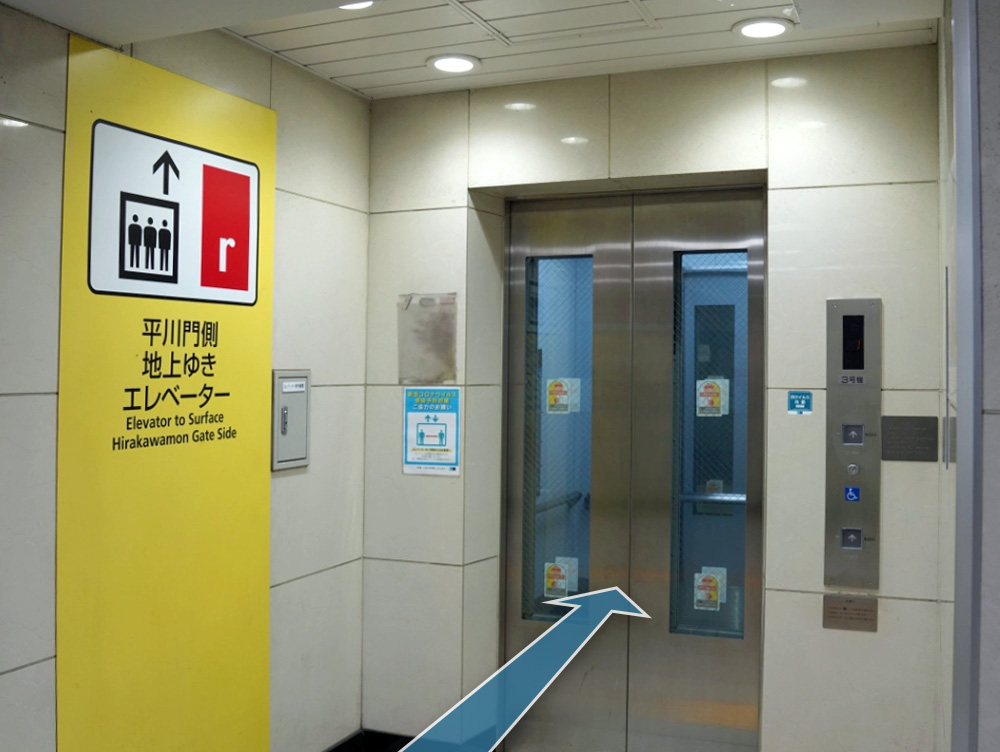
Photo: Hirakawamon Gate side elevator to ground level with a signboard (elevator to ground level) in front
4 Once through the ticket gate, the elevator No. 3 is straight ahead on the left. Take the elevator to ground level on the Hirakawamon Gate side.
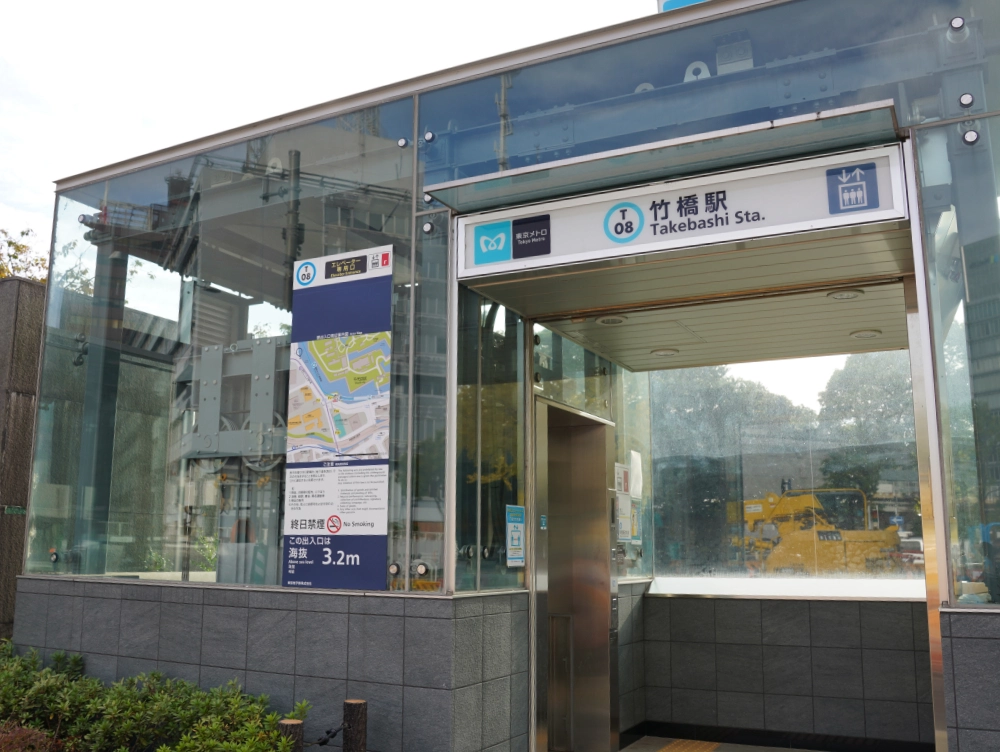
Photo: Elevator exterior and a sign that says T08 Takebashi Station.
5 Exit 2 is at ground level. It is about 500m from the exit to the Museum.
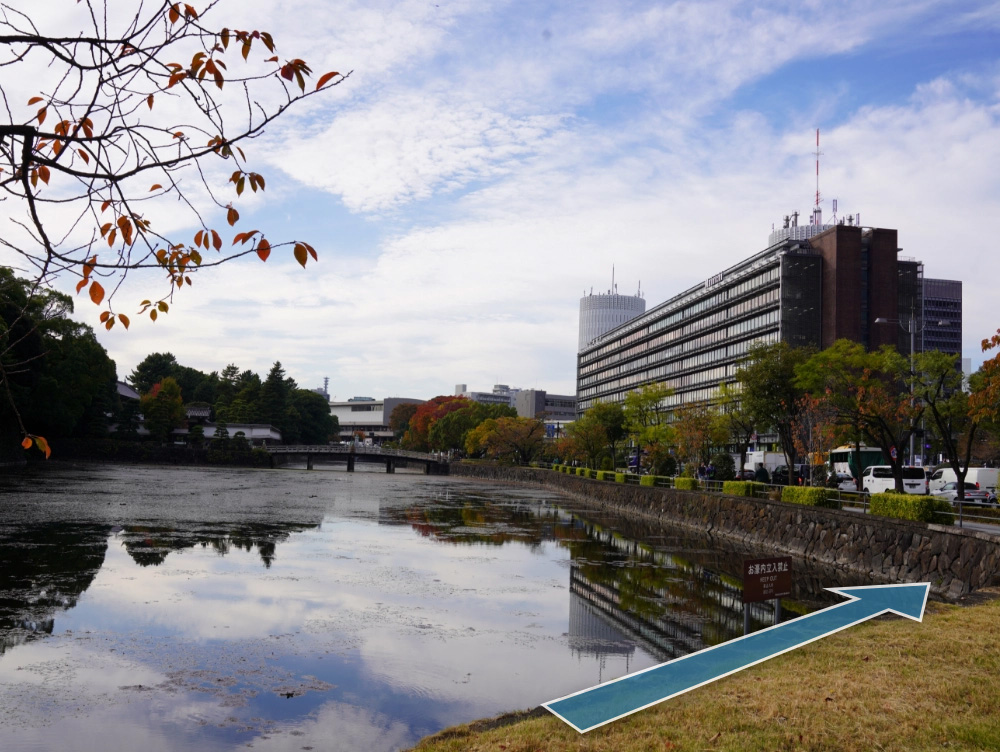
Photo: Hirakawamon Gate of the Imperial Palace, Kitanomaru Park with a view of the moat
6 Leave the elevator and proceed to the left ( towards Hirakawamon Gate at the Imperial Palace, Kitanomaru Park, and Takebashi Bridge). It is about 500m from here to the Museum.
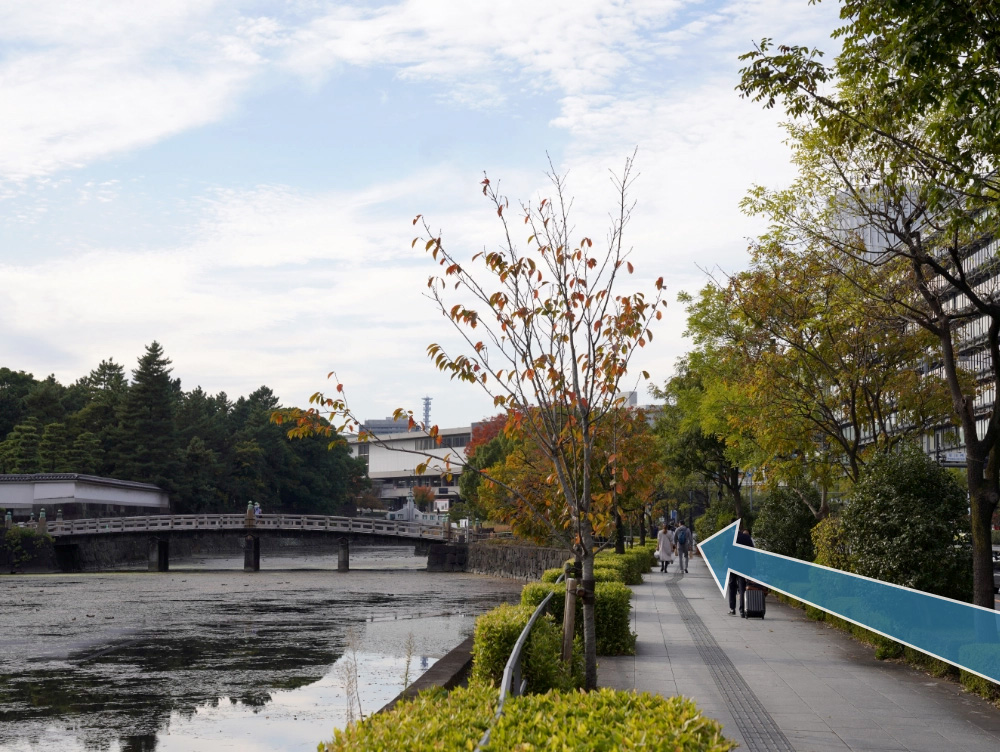
Photo: Hirakawabashi Bridge (wooden bridge) over the Hirakawa Gate of the Imperial Palace to the left of the moat
7 Continue along the moat. On the left is Hirakawabashi Bridge (wooden bridge) leading to the Hirakawamon Gate.
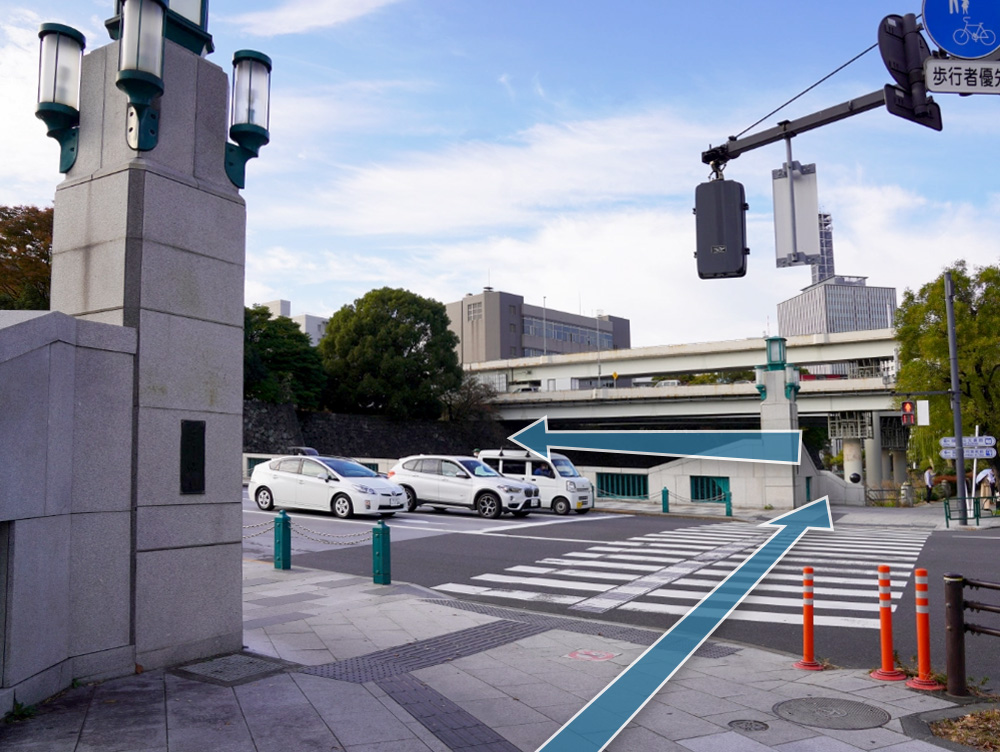
Photo: Traffic light in front of Takebashi Bridge.
8 Cross the street at the traffic light before the bridge.
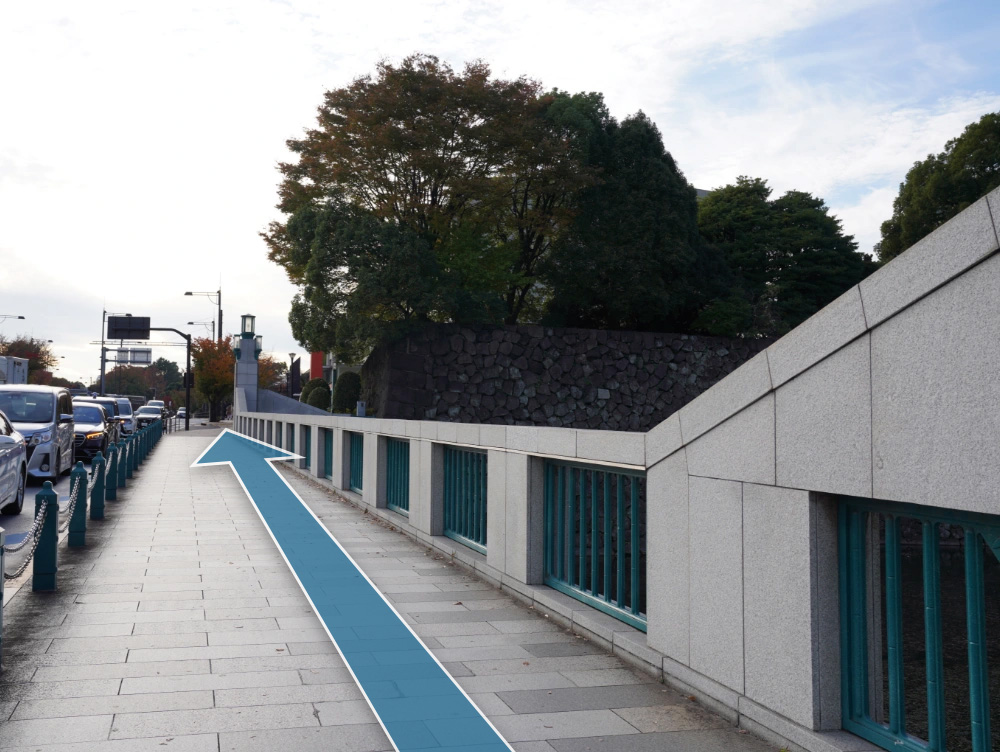
Photo: Takebashi Bridge with the road on the left and the moat on the right.
9 Continue across the bridge. The sidewalk is on a gentle incline.
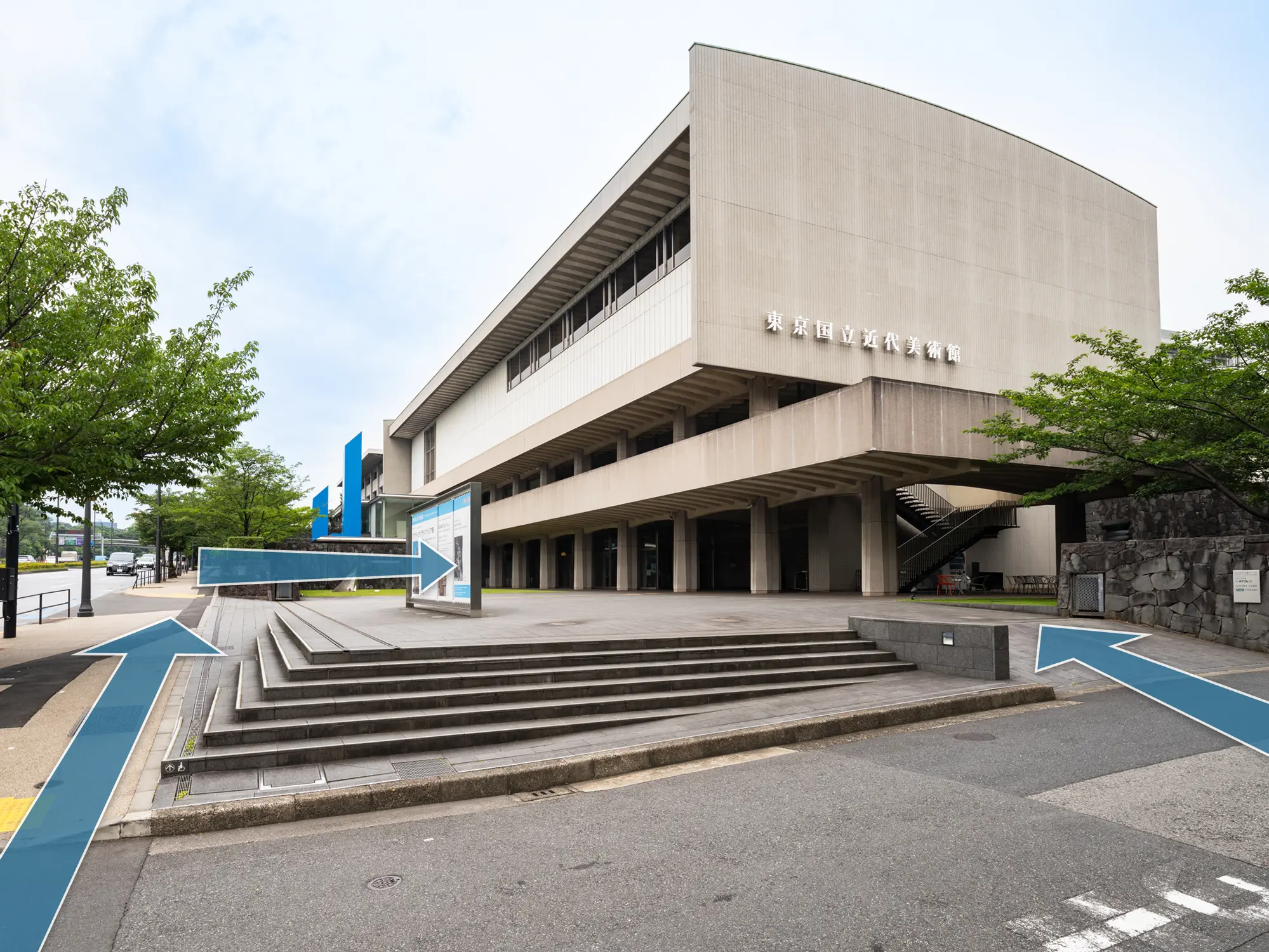
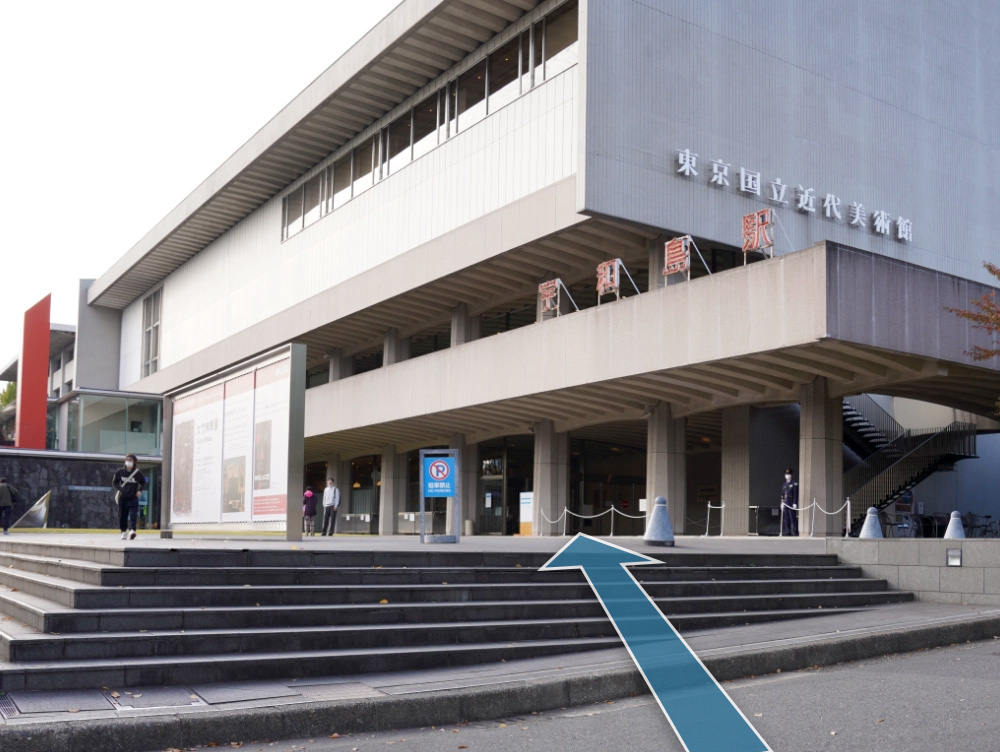
Photo: There are slopes on the left and right sides of the exterior of the National Museum of Modern Art, Tokyo. Go straight on the left slope and turn right, or go straight on the right slope
10 The museum on the right. There are two access ramps at the museum. The left-hand slope is gentler.
Page Top