


Exhibitions
MOMAT Collection(2026.3.3–5.10)
Date
-Location
Collection Gallery, from the fourth to second floors
Highlights
Photography by Arrow Art Works ©2005
Welcome to the MOMAT Collection!
To introduce some features of the museum’s exhibitions of works from the collection: First, its scale is one of the largest in Japan, displaying approximately 200 works each term from the museum’s holdings of approximately 14,000 works acquired since its opening in 1952. Also, it is one of the foremost exhibitions in Japan, tracing the arc of Japanese modern and contemporary art from the end of the 19th century to the present day through a series of 12 rooms, each with its own specific theme.
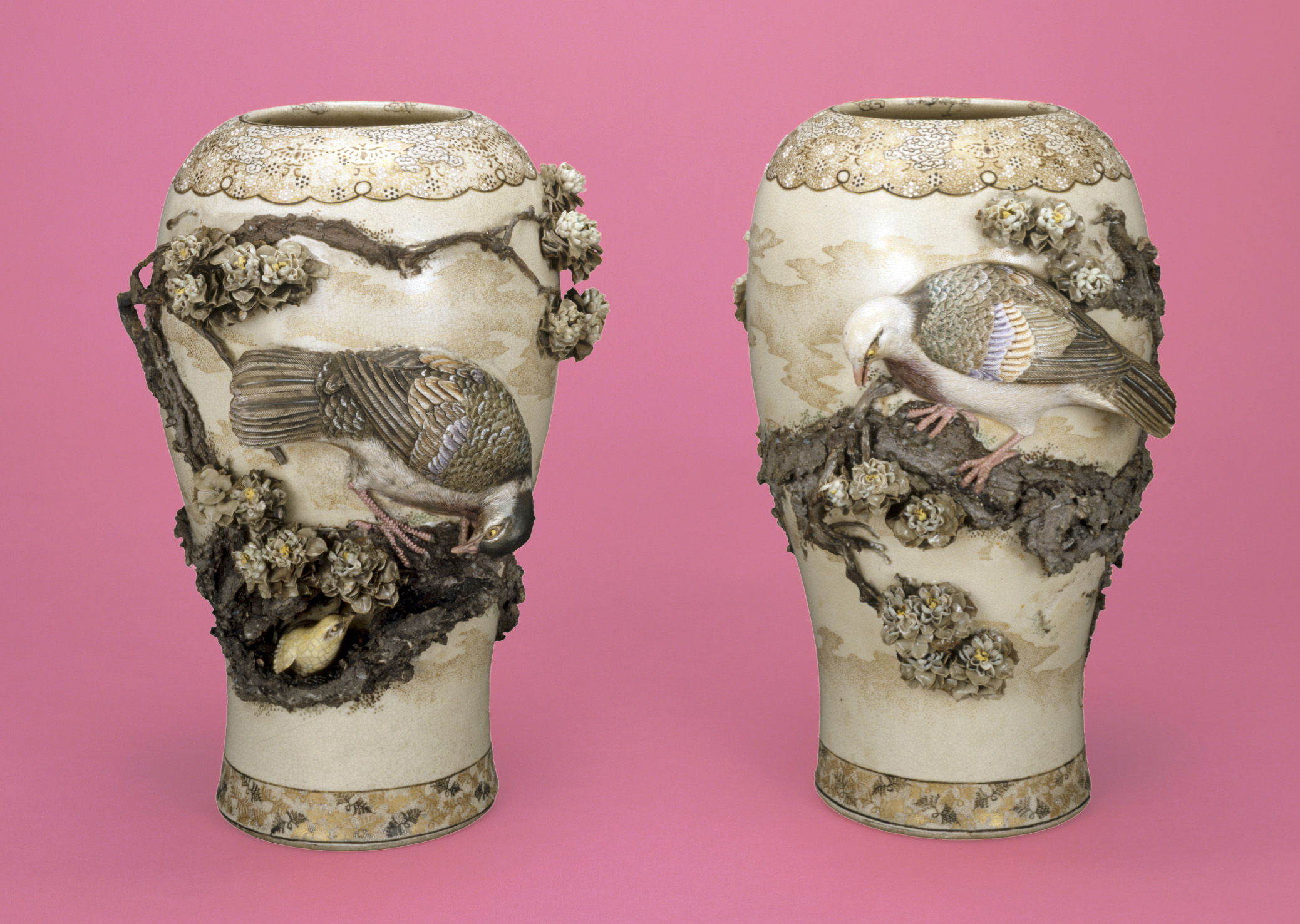
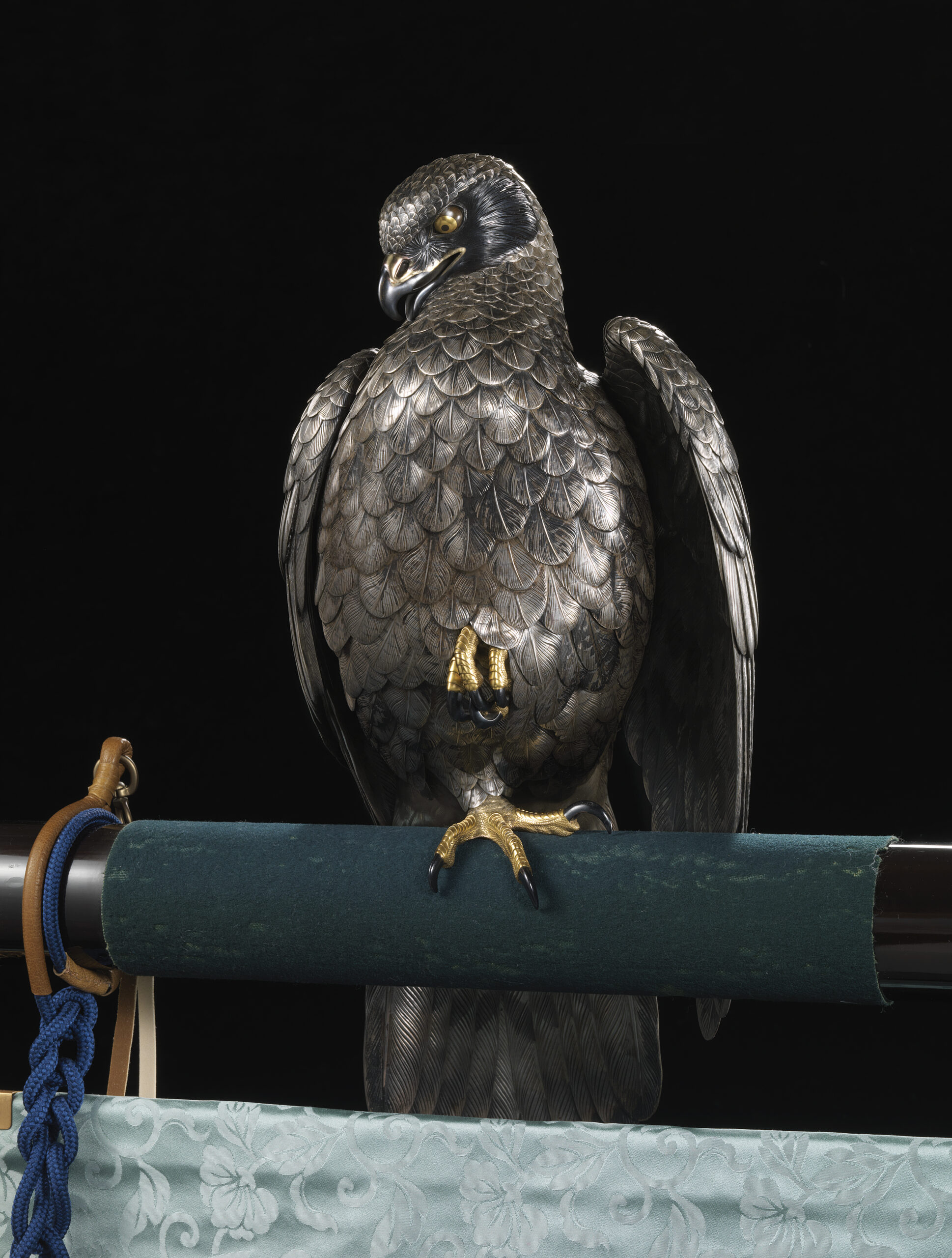
Some highlights of the current term are as follows. Room 2 on the fourth floor presents a collaboration between this museum and the National Crafts Museum. It features an array of masterworks, including Suzuki Chokichi’s Twelve Bronze Falcons (a National Important Cultural Property) and the newly acquired Large vase in flower-and-bird design with elephant-shaped ornament by Kanamori Soshichi.
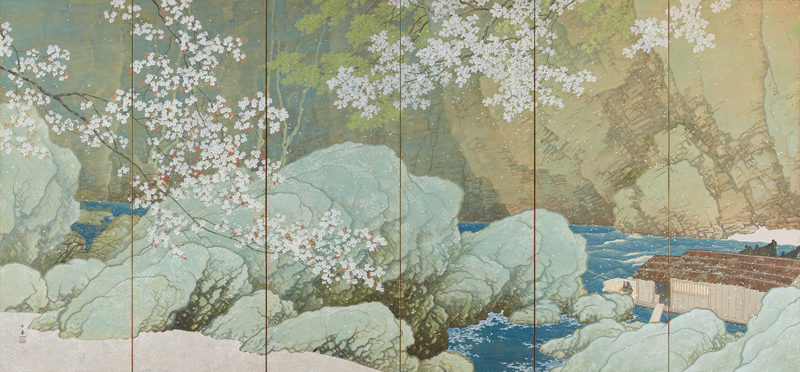
In relation to our annual Spring Festival in MOMAT, the exhibition will feature well-loved works such as Kawai Gyokudo’s Parting Spring and Atomi Gyokushi’s Scroll of Cherry Blossoms (March 3 to April 12). The period following the Spring Festival (April 14 to May 10) will also offer a feast for the eyes. In conjunction with the exhibition Shimomura Kanzan: A Retrospective on the first floor (opening March 17), we will present an extraordinary group of works by artists connected to Shimomura, including Yokoyama Taikan and Hishida Shunso.
Once again this term, we are pleased to offer an abundant lineup of works from the MOMAT Collection for your enjoyment.
National Important Cultural Properties on display
The National Museum of Modern Art, Tokyo Collection contains 18 items that have been designated by the Japanese government as National Important Cultural Properties. These include twelve Nihon-ga (Japanese-style) paintings, five oil paintings, and one sculpture. (One of the Nihon-ga paintings and one of the oil paintings are on long-term loan to the museum.)
The following National Important Cultural Properties are shown in this period:
- Room 1 Kawai Gyokudo, Parting Spring, 1916
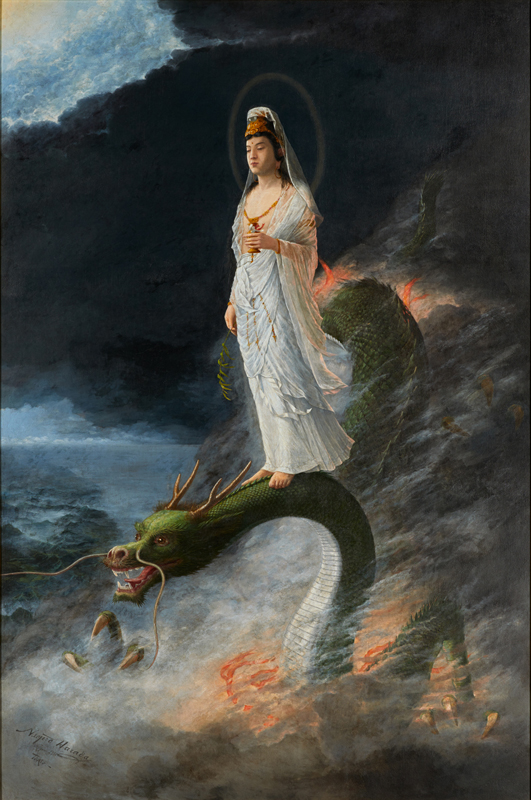
- Room 1 Harada Naojiro, Kannon Bodhisattva Riding the Dragon, 1890, Long term loan (Gokokuji Temple Collection)
- Room 2 Suzuki Chokichi, No.4, No.5, and 6 from Twelve Bronze Falcons, 1893
- Room 3 Yorozu Tetsugoro, Nude Beauty, 1912
- Room 10 Hishida Shunso, Bodhisattva Kenshu, 1907
- Gallery 4 Shinkai Taketaro, Bathing, 1907
Photography by S&T PHOTO ©2017
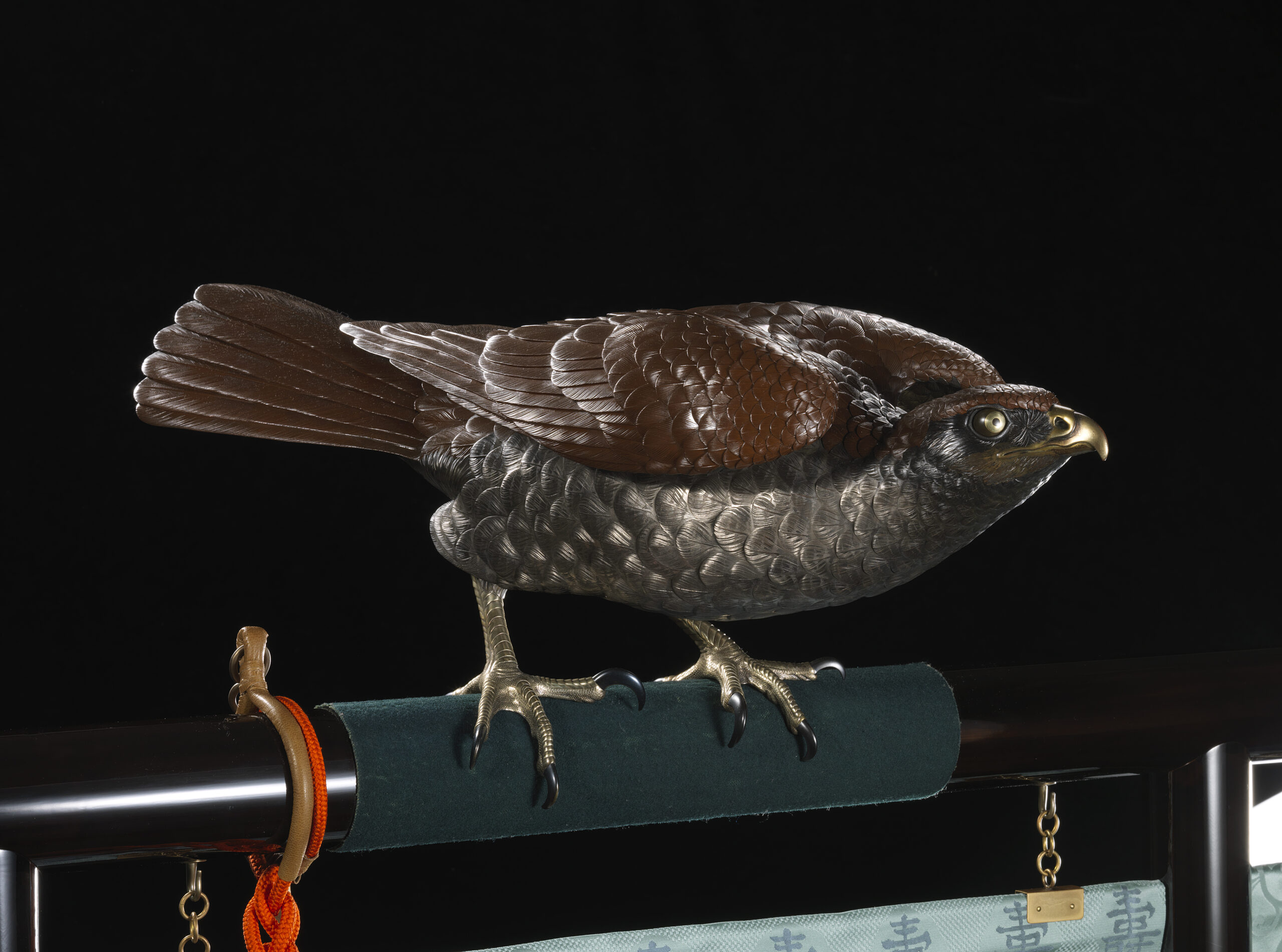
Photography by S&T PHOTO ©2017
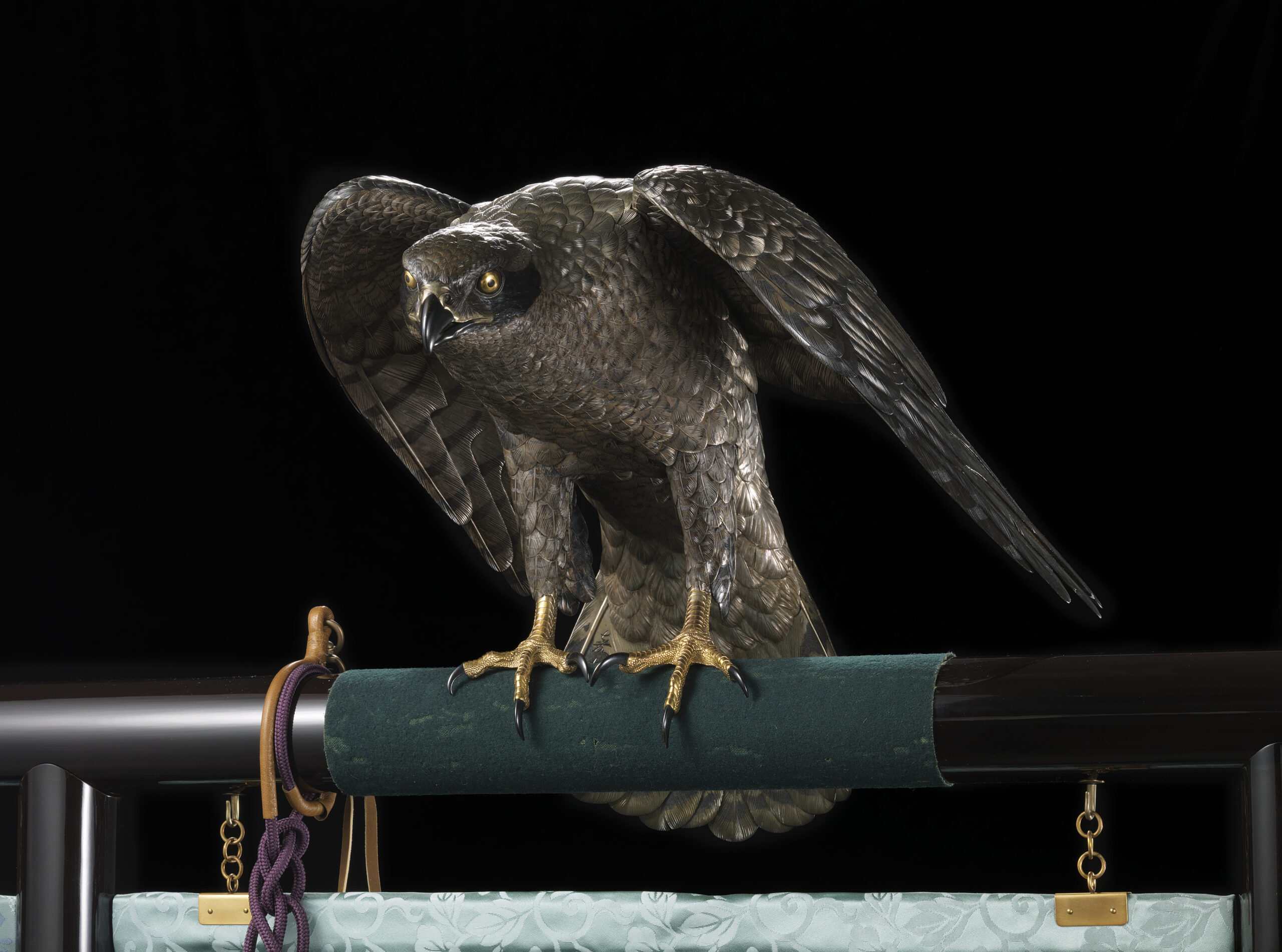
Photography by S&T PHOTO ©2017
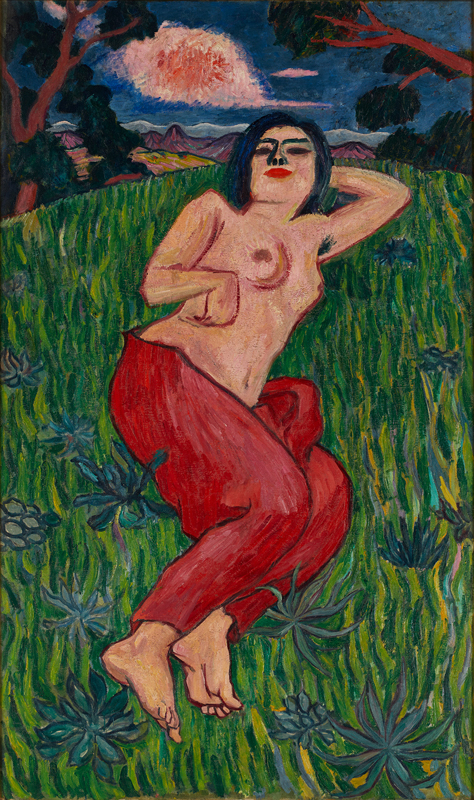
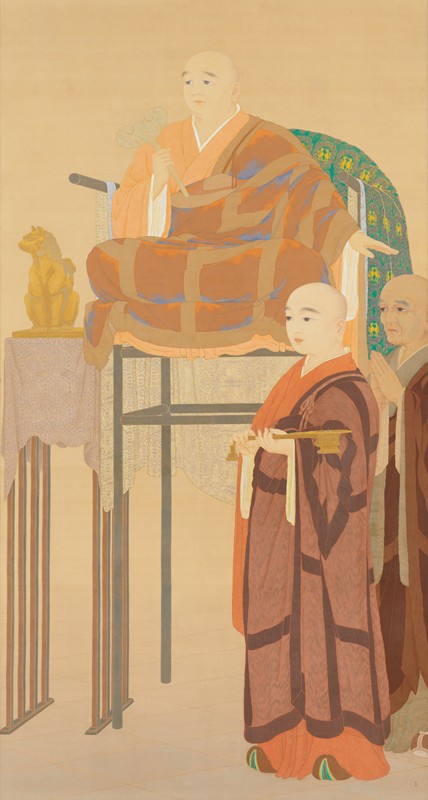
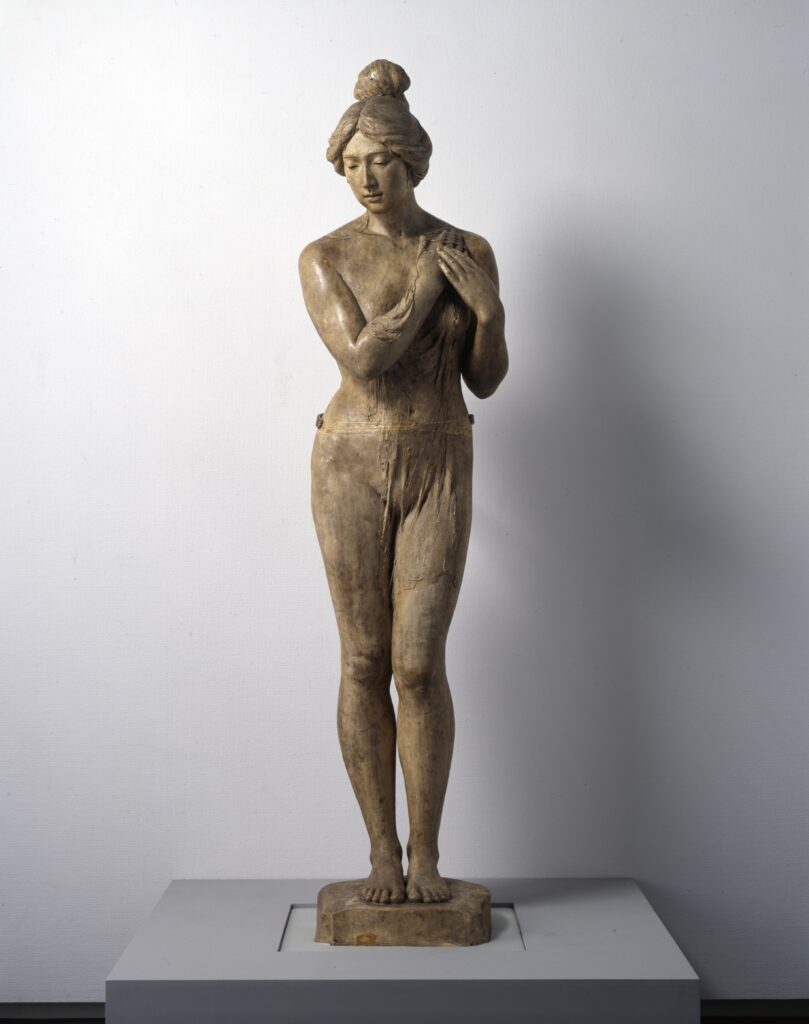
Photography by Otani Ichiro
※displayed in Gallery 4
About the Sections
4F (Fourth floor)
A Room With a View
Located on the top floor of the museum, the rest area is furnished with Bertoia chairs, which can be compared to masterpieces of chair design. Please relax by the bright window. The large windows offer panoramic views of the greenery of the Imperial Palace and the Marunouchi skyline.
Information Section
Located in the introductory area, the Information Section presents a chronology of the MOMAT’s history, along with related materials. The materials on display are constantly being changed, so don’t miss them. The section also provides information on exhibitions at other museums that include works on loan from our museum, as well as a system for searching for works in our collection.
Room 1–5 1880s–1940s
From the Middle of the Meiji Period to the Beginning of the Showa Period
Room1 Highlights
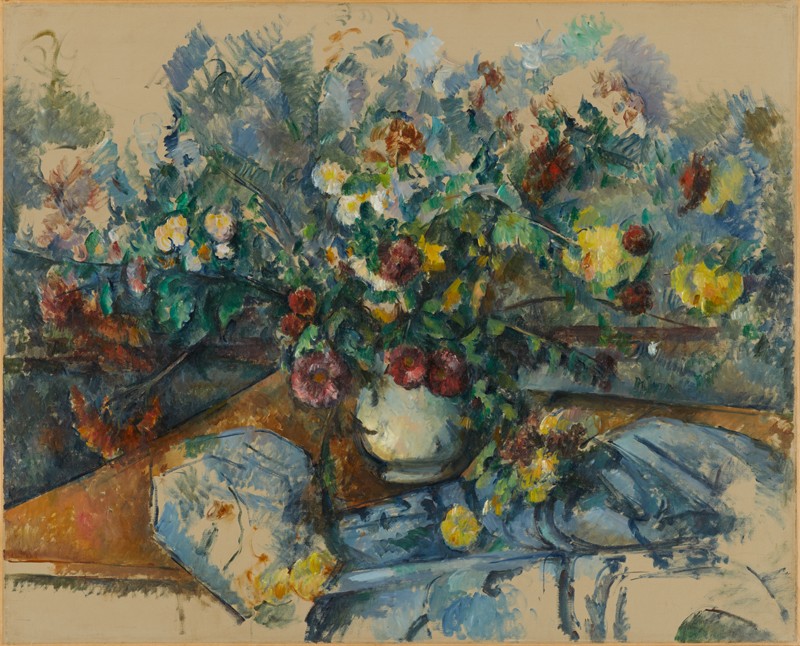
The MOMAT Collection exhibition of works from our permanent holdings features nearly 200 items in a 3,000-square-meter space. The Highlights section of this exhibition features highly prized works of modern and contemporary art that showcase the strengths of our collection.
In the first half of this term (March 3 to April 12), the Nihonga (Japanese-style painting) area will present flower-related works, including Kawai Gyokudo’s Parting Spring (1916, Important Cultural Property). In the second half (April 14 to May 10), it will feature works such as Kawabata Ryushi’s Song of Newly Green Trees (1932), which depicts the fresh buds of trees with splendid clarity. Outside the display cases, we have selected popular works with dates at roughly 10-year intervals, from the oldest, Paul Cézanne’s Grand Bouquet of Flowers (ca. 1892–95), to the newest, two works by Murakami Takashi (1996). While some dates fall a little closer together than others, these choices allow visitors to enjoy an art tour spanning about a century within this single room. Please also take this opportunity to spend time with the works of Henri Rousseau, appearing here for the first time in about a year.
Room 2 Straying, Striving: Art in the Meiji Era
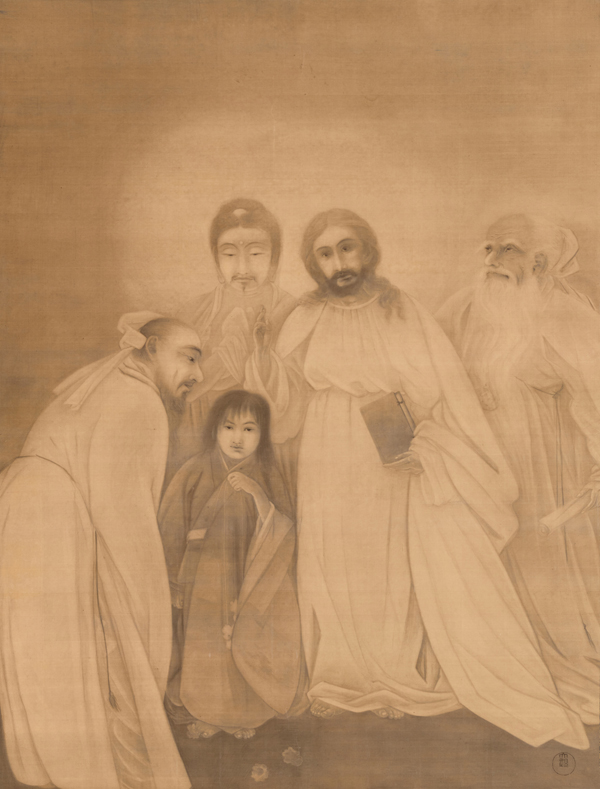
This room presents works of art and craft from the Meiji era (1868–1912), a time when Japan was emerging as a modern nation in Asia, from the collections of the National Museum of Modern Art, Tokyo and the National Crafts Museum.
At the time, genre categories were still fluid, and in painting and sculpture, artists experimented with new approaches grounded in their own traditions while drawing on Western realist techniques. In crafts, artists built on their traditional techniques to produce intricate and ornate works destined for the West. How do the arts of that time, which sought to bring together old and new, Japanese and Western, appear to us today?
Masterworks newly acquired by both museums include Yokoyama Taikan’s The Stray Child (1902) (on view in the first half [March 3 to April 12]), Hashimoto Gaho’s Linji Yixuan Issues a Rebuke (1897) (on view in the second half [April 14 to May 10]), and Kanamori Soshichi’s Large vase in flower-and-bird design with elephant-shaped ornament (ca. 1892) (on view for the full term). Please take the opportunity to view these outstanding works.
Room 3 The Taisho-Era Flowering
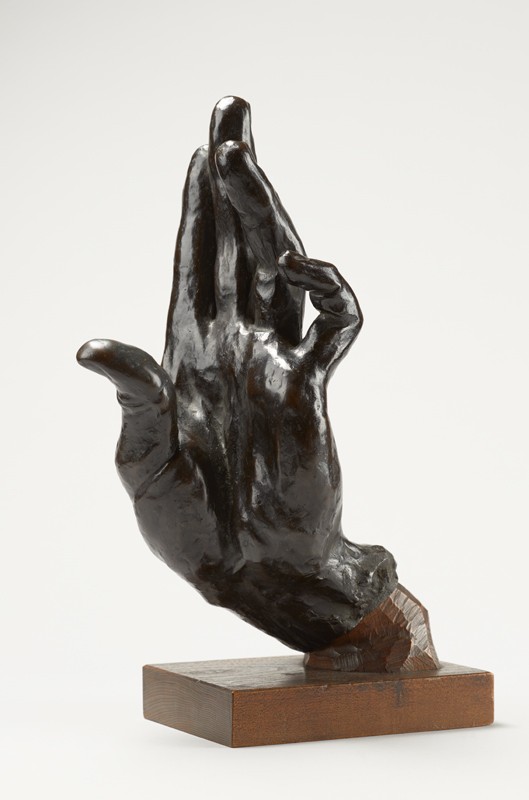
Photography by Otani Ichiro
Following the Meiji era (1868–1912), during which Japan strove to establish its identity as a modern nation, the Taisho era (1912–1926) saw many works shaped by the distinct voice of each artist. Young artists pursued forward-looking approaches while absorbing new Western developments, as if pushing back against the moderate realism of earlier generations.
The sculptor and poet Takamura Kotaro argued for the absolute freedom of art in his critical essay Green Sun, influencing many artists of his generation. Rabbit, shown in the previous room, and Hand, on view here, are both his works, yet they form a striking contrast. The pairing of a delicately carved wood figure with a vital and dynamic bronze form conveys the shift from the Meiji to the Taisho era. Beginning with Minami Kunzo’s One Day in June (1912), which retains traces of the Meiji era, and progressing through the bold brushwork and color of Yorozu Tetsugoro, to shin-hanga (new woodcut prints), which carried forward the ukiyo-e tradition while introducing artistic innovations, this section offers a concise look at the varied richness of Taisho-era art.
Room 4 Nohgaku and Kabuki
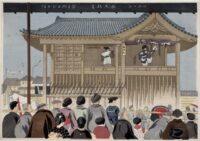
Nohgaku (Noh and Kyogen, the comic plays performed alongside Noh), refined by Kan’ami and Zeami in the Muromachi period (1336–1573), and Kabuki, which developed from Kabuki odori, the dance originated by Izumo no Okuni in the Azuchi-Momoyama period (1568–1600), evolved along different paths in the Edo period (1603–1868), with nohgaku becoming established within samurai culture and Kabuki gaining favor among the wider public. After the Meiji Restoration of 1868, nohgaku lost its patrons and entered a temporary decline, but a renewed interest in traditional culture soon followed, and with the support of court nobles, peers, and newly wealthy patrons, it reached broader audiences. Kabuki, while subject to government intervention, also gained momentum with the emergence of forms such as Shin-Kabuki (“new” Kabuki). Within this environment, from the mid-Meiji era (1868–1912) through the Taisho era (1912–1926), painters who specialized in noh-ga (paintings of Noh and Kyogen) and artists known for yakusha-e (actor portraits of Kabuki performers) came to prominence, and this room presents noh-ga and yakusha-e produced in the early Showa era (1926–1989) by Tsukioka Gyokusei and Torii Tadamasa. Modern Nihonga (Japanese-style painting) artists also created many works on nohgaku and Kabuki, and displayed alongside these is a study for Study for Kabuki by Female Actor by Kaburaki Kiyokata, an artist well known for his love of theater.
*In preparing the commentary for this room, we received valuable scholarly assistance from Shohara Setsuko of the Graduate School of Comprehensive Human Sciences Doctoral Program in Art.
Room 5 P Counterpoint in the Interwar Period
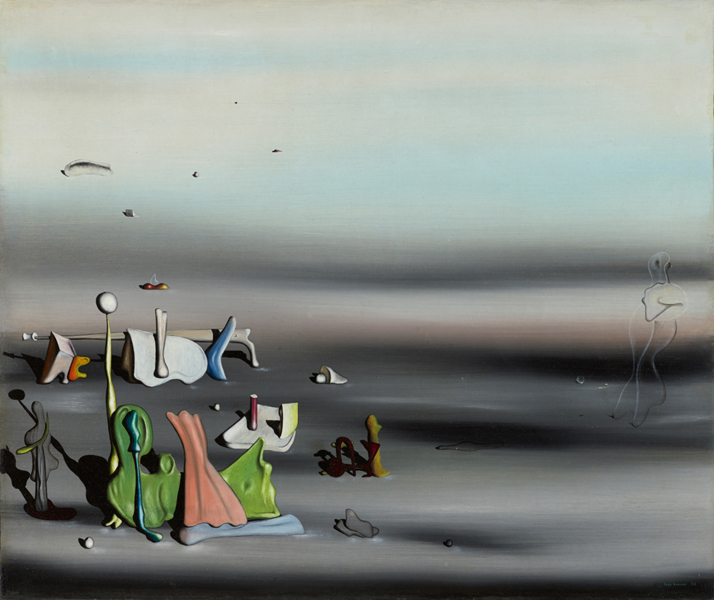
Counterpoint, the title of Okamoto Taro’s work on view in this room, is a musical term that refers to the technique of layering multiple independent melodies to produce harmonic interplay. During the years between the end of World War I and the outbreak of World War II, in the 1920s and 1930s, two major movements, Surrealism and abstraction, came to the fore, especially in Europe. Drawing on developments in psychoanalysis and the natural sciences respectively, Surrealism probed the subconscious mind, while abstract art pursued a form of representation that aimed for truths beyond the visible world. Although they are often framed as a dichotomy between the “irrational” and the “rational,” Okamoto’s search for an art that belonged to neither shows that many artists were aware of how the two movements echoed one another, creating a sense that new artistic possibilities were opening up. These two “melodies” were also battle songs of opposition to the political climate of the period, which was increasingly overshadowed by the rise of fascism.
3F (Third floor)
Room 6-8 1940s–1960s From the Beginning to the Middle of the Showa Period
Room 9 Photography and Video
Room 10 Nihon-ga (Japanese-style Painting)
Room to Consider the Building (Sol LeWitt, Wall Drawing#769)
Room 6 Art / War: 1941–1945
The Sino-Japanese War began in 1937. The National Mobilization Law was enacted the following year, forcing Japanese citizens to cooperate with the war effort. Artists were no exception. Many were sent to the front and made pictures documenting the war. There was also a crackdown on free and avant-garde expression, leading exhibitions to be banned and art groups dissolved.
The works assembled in this room were created between 1941 (the year of the attack on Pearl Harbor) and 1945 (the end of World War II), a period in which war conditions were becoming increasingly severe. The war-record paintings express a direct link between war and art in an easily understandable manner. Other works, which remained firmly grounded in a given style, seem to have largely escaped the influence of the war. Still other works seem to indirectly convey a sense of discomfort regarding the war. It would be inappropriate to divide works of the era into those that represent art and those that represent the war, or those that express support or opposition to the conflict. All of them contain aspects of war and art, and the fact that we are confronted with both of these elements is what makes them so difficult to look at.
Room 7 Imai Hisae and Okanoue Toshiko
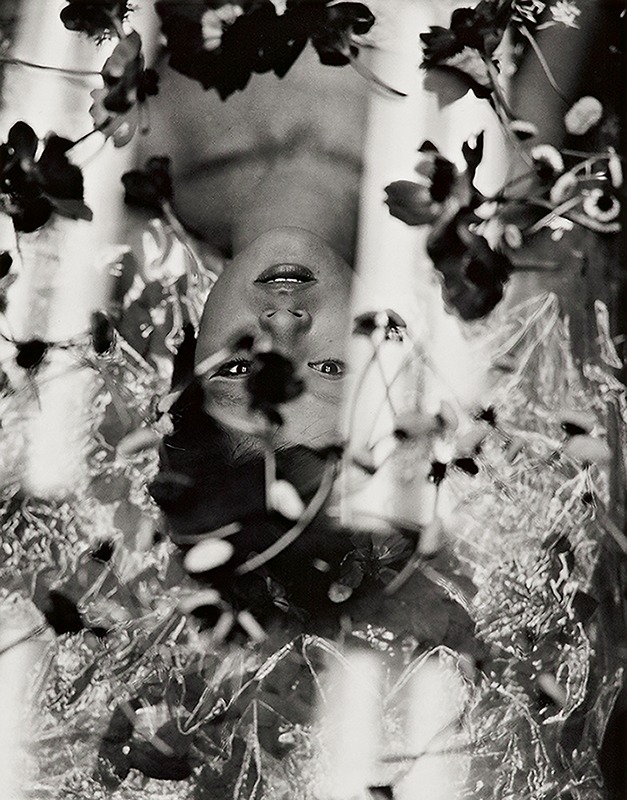
This room focuses on the work of Imai Hisae (1931–2009) and Okanoue Toshiko (b. 1928), two artists active during the same period. Both enrolled at Bunka Gakuin in 1950, where Imai studied in the fine arts department and Okanoue in the design department. Although they did not have a close relationship as students, each received encouragement in her work from the poet and critic Takiguchi Shuzo. Both also showed work at this museum early in their careers: Okanoue exhibited her collages in Abstraction and Fantasy (1953), and Imai presented Ophelia, the series that became her signature work, in Contemporary Japanese Photographies 1960 (1961). Their working approaches differ, yet their art draws on a shared imaginative vocabulary in which the female body moves freely across boundaries and takes on other forms. These visions also reflect the sensibilities of the postwar era. This room additionally features works by Fukushima Hideko and Miyawaki Aiko, who also studied at Bunka Gakuin, as well as Narahara Ikko, who was active in photography during the same period as Imai, tracing the wider landscape of art in those years.
Room 8 Gloss and Shine
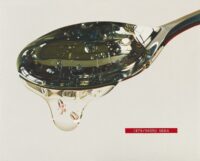
Have you seen Room to Consider the Building located outside the entrance to this room? Wall Drawing, which covers the walls, is a form of instruction-based work in which the conception and the fabrication of a work are handled separately by different people. In the 1960s in particular, many artists pursued approaches that stripped down artistic practice in an effort to understand what lay at its core. Is handwork necessary? Should only structures be shown? Can a work act on the sense of sight alone, or reduce form and material to their essence? Through a wide range of experiments, artists began producing works that used materials and surfaces reminiscent of industrial products, or that incorporated light sources. The theme of this room also connects with Isamu Noguchi’s Gate (1969) and Tada Minami’s Chiaroscuro (1979), both installed outdoors at the museum. These works are often overlooked, so please take a moment to view them on your way out.
Room 9 Ueda Shoji: Sand Dune Theatre
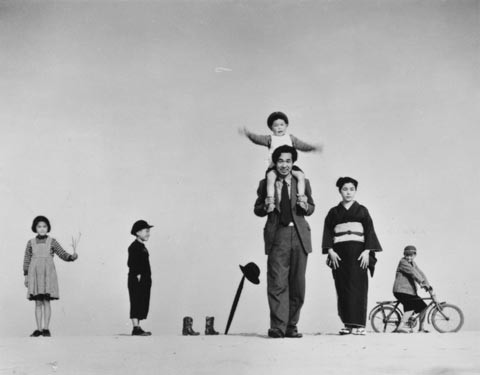
Based in his hometown of Sakaiminato, Tottori Prefecture, Ueda was an internationally renowned photographer, whose style was rooted in modernism. Born in 1913, Ueda started taking pictures in junior high school. While running a camera shop, he made a wide range of works for some 70 years, from the 1930s to the 2000s.
Here, we present a series of staged photographs, set on the beach near Ueda’s house and the Tottori Sand Dunes, which is synonymous with the artist. The series centers on the pictures taken between 1948 and 1950. Known as “Ueda-cho,” the artist’s style can be defined as a unique sense of composition and humor against a backdrop of the Sanin Region’s characteristically soft sunlight and expansive sand dunes.
Not long after World War II, photorealism, rooted in social realism, began to flourish. It was at this time that Ueda’s free-wheeling artistic outlook, which seemed to express the joy that he felt at being able to resume his photographic practice at war’s end, created a vivid impression (“In Sanin, we have Ueda”) in the Japanese photography world.
Room 10 (Dates: March 3-April 12) Spring Festival
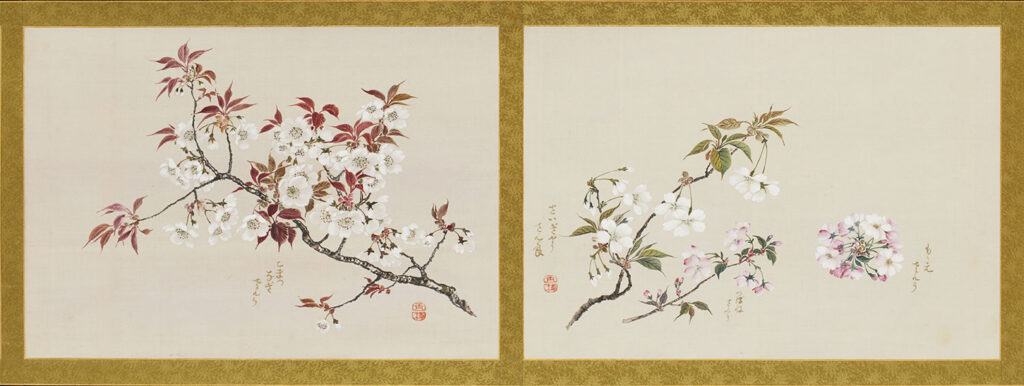
The Spring Festival in MOMAT has become an annual tradition. This year we have included slightly more works, and among Nihonga (Japanese-style painting) we are presenting spring-related paintings both in this room (10) and Room 1 on the fourth floor. In Room 10, visitors can sit on Kenmochi Isamu’s rattan stools or Seike Kiyoshi’s mobile tatami mats and enjoy a leisurely blossom viewing.
Kikuchi Hobun’s Fine Rain on Mt. Yoshino, now a familiar fixture of the Spring Festival, is on view in this room. Please look closely at the surface. You may notice details that only become clear when seeing the actual painting, such as the unexpected heavy rain, the presence of people, and the buildings. In Atomi Gyokushi’s Scroll of Cherry Blossoms, more than forty rare varieties of cherry trees appear across twenty-five images. Among them may be varieties that bloom in succession along the path from the museum to Chidorigafuchi. On a spring day, we invite you to savor the counterpoint between the blossoms in these paintings and the blossoms outside the museum.
Room 10 (Dates: April 14-May 10) Lingering Spring /Geniuses of Their Generation
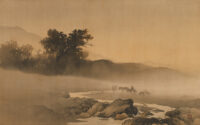
In the area at the front, as in the first half of this term, we continue to present works related to spring. In the glass case area at the back, in connection with Shimomura Kanzan: A Retrospective currently on view on the first floor, we showcase the artists around Shimomura as “geniuses of their generation,” a phrase taken from the advance flyer for the exhibition.
Okakura Tenshin, a leading intellectual of the Meiji era (1868–1912), headed the Tokyo Fine Arts School and later the Japan Art Institute, guiding Shimomura and others in revitalizing traditional painting. Hirakushi Denchu’s Kakusho, a statue of Okakura Tenshin, conveys his commanding presence. Hashimoto, who taught Shimomura painting in his youth, served as a role model for him both as chief of the painting department at the School and as a senior figure at the Institute. Hashimoto’s Rinzai can be seen in Room 2 on the fourth floor. Kawai Gyokudo was a fellow pupil who studied under the same teacher, Hashimoto, and Terasaki Kogyo resigned from and returned to teaching positions at the School at the same time as Shimomura. Yokoyama Taikan and Hishida Shunso are known as close associates who shared both hardships and joys.
2F (Second floor)
Room 11–12 1970s–2020s
From the End of the Showa Period to the Present
Room 11 Between Painting and Seeing –Painting Since the 1990s
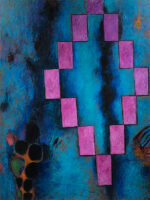
With the advent of photography in the 19th century, the nature and meaning of painting, which had long seemed anchored in the idea of realistically representing the world before one’s eyes, were called into question. From the second half of the 20th century onward, each time movements such as Pop Art, Minimalism, and Conceptualism emerged, discussions of “the death of painting” resurfaced, and were soon followed by talk of its “restoration” or “return.” Today, painting persists without interruption, even as its forms and approaches continue to shift. With the recently acquired work by Sekine Naoko as a starting point, this section presents works from the museum’s painting collection, focusing on artists who continue to ask, with unwavering directness, what painting is and what it means to paint, navigating the relationship between the act of making images and the world they see.
Room 12 Everything Flows
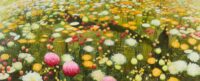
“Everything flows” is a principle set forth by the ancient Greek philosopher Heraclitus. It expresses the idea that all things in this world are constantly changing and never remain in the same state. This resonates with the Buddhist concept of impermanence. In the modern age, when so much moves at great speed, this thought may feel self-evident, yet even things that seem identical at first glance undergo subtle changes as long as they exist in this world.
Here we have gathered paintings, sculptures, and photographs that give fixed form to celestial bodies and trees, to light and cities, and to the sea, all of which are, in fact, always shifting. When you gaze at these works, which appear still, can you sense a faint trace of movement? They also call to mind unending cycles, such as stillness and motion, sunrise and sunset, light and darkness, life and death. And these works themselves are no exception to the principle that all things are in flux.
Hours & Admissions
- Location
-
Collection Gallery, from the fourth to second floors
- Date
-
March 3, 2026–May 10, 2026
- Closed
-
Mondays (except March 30, May 4)
- Time
-
10 am–5 pm (Fridays and Saturdays open until 8 pm)
- Last admission: 30 minutes before closing.
- Admission
-
Adults ¥500 (400)
College and university students ¥250 (200)- The price in brackets is for the group of 20 persons or more. All prices include tax.
- Free for high school students, under 18, seniors (65 and over), Campus Members, MOMAT passport holder.
- Show your Membership Card of the MOMAT Supporters or the MOMAT Members to get free admission (a MOMAT Members Card admits two persons free).
- Persons with disability and one person accompanying them are admitted free of charge.
- Members of the MOMAT Corporate Partners are admitted free with their staff ID.
- Including the admission fee for MOMAT Collection Focus (Gallery 4).
- Discounts
-
Evening Discount (From 5 pm on Fridays and Saturdays)
Adults ¥300
College and university students ¥150 - Organaized by
-
The National Museum of Modern Art, Tokyo